
Stop Sweating: Why a “Wet” Kitchen is Costing You Money
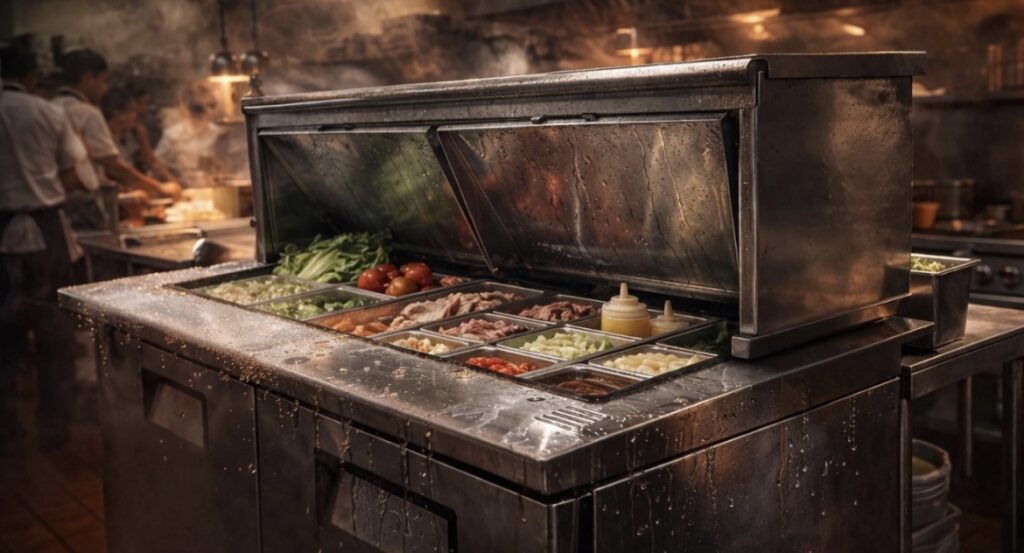
If you walk down your prep line during a busy Friday night and see water beads forming on the lids of your sandwich units, you might think it’s just a sign of a hardworking kitchen. But that “sweat” is actually a red flag.
In the world of commercial refrigeration, condensation is more than a mess—it’s a symptom of inefficiency that attacks your food quality and your equipment’s lifespan.
The Anatomy of a “Sweaty” Line
Why does it happen? It’s a simple battle of physics. When the hot, humid air of a firing kitchen hits the cold metal surfaces of your prep table, moisture is pulled out of the air. If your lids aren’t properly designed or insulated, they become “condensation plates” that drip right into your fresh ingredients.
3 Reasons to Stop the Sweat
- Protect the Crunch: Your customers aren’t paying for soggy lettuce or water-logged tomatoes. When condensation drips into your food pans, it dilutes your quality and ruins the texture you worked hard to prep.
- Give Your Compressor a Break: Your refrigeration unit is designed to cool air, not to act as a dehumidifier. When moisture enters the system, the compressor has to work twice as hard to stay at a safe temperature. This “stress” leads to higher utility bills and premature mechanical failure.
- Validate Your Food Safety: In 2026, health standards are higher than ever. Standing moisture is a magnet for contaminants. A dry station isn’t just a clean station—it’s a safe one.
How to Take Control
Being an informed operator means knowing what to look for. Check your door gaskets for leaks, ensure your HVAC isn’t blowing humid air directly at your line, and when it’s time to upgrade, look for units with insulated lids and high-efficiency refrigerants (like R290). These features are designed to win the war against humidity so your team can focus on the food.
Stop sweating the small stuff—literally—and start protecting your bottom line.