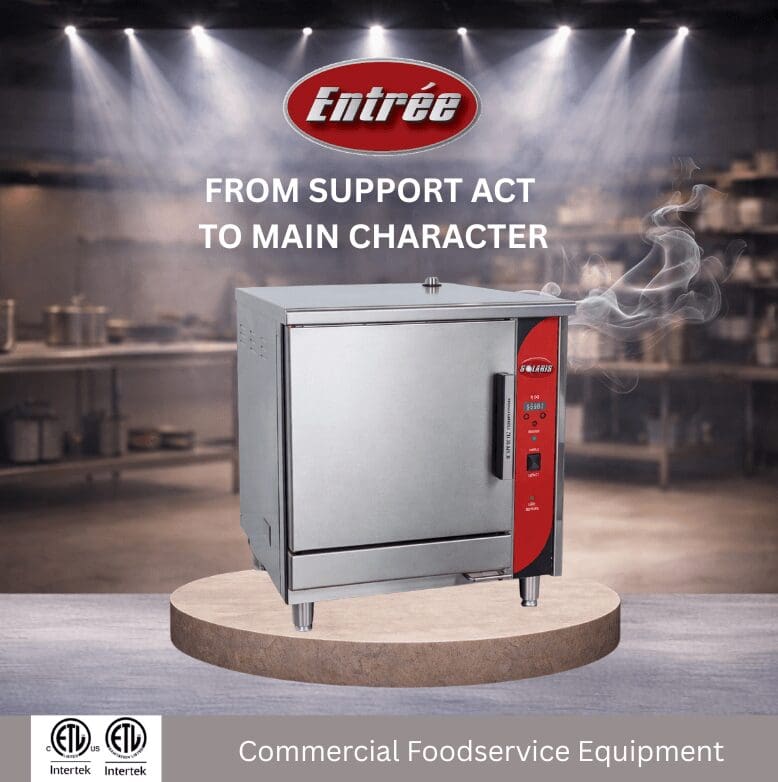
FROM SUPPORTING ACT TO MAIN CHARACTER
Steam is No Longer a Supporting Act
For decades, steam was the “background character” of the commercial kitchen—relegated to blanching vegetables or reheating pre-cooked items. However, a revolution is underway. Modern commercial steamers are transitioning from supporting acts to leading roles, delivering superior food quality, significant speed, and enhanced kitchen productivity. The data unequivocally supports this shift: steam is no longer a peripheral player, but a central pillar of the modern line.
The Power of Precision: Data-Driven Performance
The resurgence of commercial steamers lies in their ability to offer precise temperature control and rapid heat transfer. This translates directly into tangible operational benefits.
1. Nutrient and Quality Retention
Studies consistently show that steaming retains more vitamins and minerals compared to boiling or roasting. For instance, research indicates that steaming preserves over 80% of Vitamin C in cruciferous vegetables, whereas boiling can drop that number below 50%. Beyond health, this preserves the “plate appeal”—vibrant colors and the crisp-tender texture that customers expect.
2. Throughput and Speed
In a high-volume environment, speed is the primary metric. High-performance steamers can cook large batches of proteins and starches in a fraction of the time required by traditional ovens.
Average Cooking Time Comparison
| Food Item | Conventional Oven | High-Performance Steamer | Time Saved |
| Red Potatoes (10 lbs) | 45-50 mins | 15-18 mins | ~65% |
| Chicken Breast (Full Pan) | 25-30 mins | 10-12 mins | ~60% |
| Fresh Broccoli (5 lbs) | 12-15 mins | 3-5 mins | ~70% |
Operational Efficiency: The Hidden ROI
While speed is the headline, the “bottom line” impact comes from consistency and labor reduction. Modern units reduce the need for constant monitoring (the “set it and forget it” factor), allowing staff to focus on plating and prep rather than tending to stovetop pots. Furthermore, because steam transfer is so efficient, there is significantly less “shrinkage” in proteins compared to dry-heat cooking, meaning more yield per pound of product purchased.
Introducing the Solaris Steamer: High-Performance Engineering
Among the leaders in this new era of kitchen equipment is the Solaris Steamer. Designed for high-performance environments that demand both speed and economy, the Solaris line bridges the gap between heavy-duty output and streamlined operation.
Unlike traditional units that struggle with recovery times, the Solaris is engineered for rapid-fire service. It ensures that the cavity returns to optimal steaming temperature almost instantly after the door is closed, maintaining the “leading role” status in a fast-paced kitchen. Whether you are focused on a high-output production line or a specialized menu requiring delicate precision, the Solaris provides the consistency required to eliminate guesswork.
Conclusion
The data is clear: commercial steamers are no longer supplementary equipment. Their impact on food quality, speed of service, and product yield has elevated them to an indispensable status. With the arrival of the Solaris line, kitchens now have a tool that matches the intensity of modern foodservice. It’s time to recognize steam for what it truly is: a powerful, efficient, and essential culinary force.